

lunedì 7 febbraio 2011

sabato 15 gennaio 2011
Menu
In this section "Menu ideas" I'm going to give you some ideas of menu for your italian wedding.
Happy hour :
a copious buffet supper
Starter:
Risotto alle code di scampi e fili di zucchine in fiore
Risotto with lobster tails and courgettes in bloom
| Chicche di patate con crema di gamberi al basilico Potato pearls with shrimp cream and basil |
| Ravioli di borragine con brunoise di verdure e pistilli di zafferano Borage ravioli with vegetables brunoise and saffron pistils |
| Filetto Veal fillet |
| Ratatuille di verdure estive Vegetables ratatuille Torta margherita farcita crema chantilly e frutti di bosco Cake filled with whipped cream and soft fruits |
venerdì 14 gennaio 2011
Wedding website
Creating a personal website after the photo session it's just a simpler way to share with your guests all the emotions and magic of your wedding day.
We can create for you a password-protected website, in this way photos can be seen only from who has the password.

There are a lot of solutions to satisfy your needs, ask us!
We can create for you a password-protected website, in this way photos can be seen only from who has the password.

There are a lot of solutions to satisfy your needs, ask us!
Details make the difference
In this blog section ( Our Weddings ), I'm going to post you some pictures of weddings that we have organised in Italy.
Here are some photos of Elisabetta & Vittorio wedding day so you can see how we work.
INFOS:
♥Number of guests: 200
♥Style: Classic
♥Colour theme: Green
♥Bride dress: White, classic and linear
♥Groom suit: Classic
♥Photo session type: Reportage
 |
| The church |
 |
| Location |
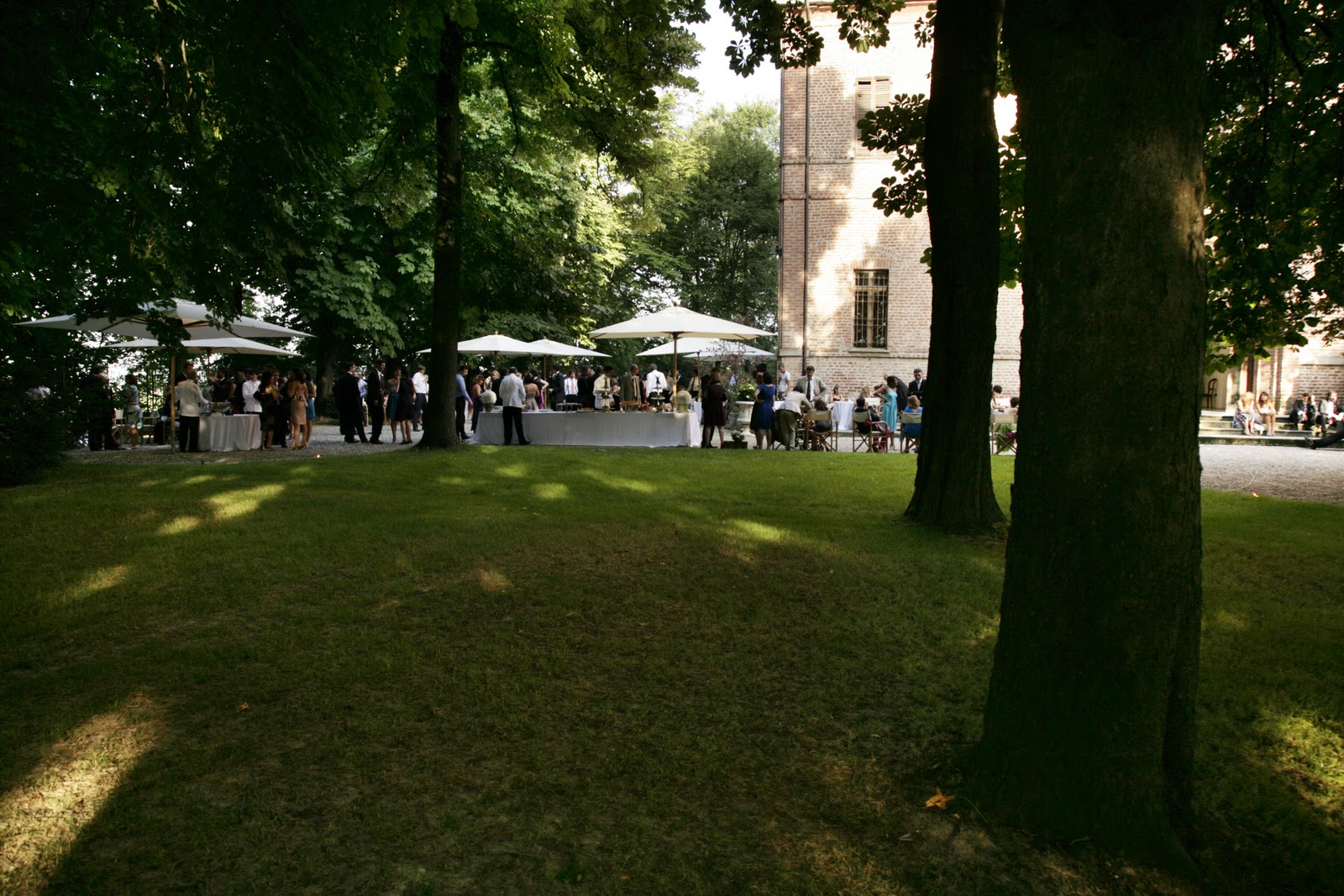 |
| Location |
 |
| Tables decorations |
 |
| Menu |
 |
| Place holder, an original idea, tarot cards! Get the idea from them! |
 |
| Vittorio & Elisabetta Wedding Cake... delicious! |
Hairstyle


Each bride has her own style! You better choose an hairstylist in tune with the caracther of your ceremony and then try it: you have to be satisfied of his work!
Seek advises from your best friends and meet your needs because you must be at ease with your wedding hairstyle!
mercoledì 12 gennaio 2011
Flower design

Flowers have an important part during the whole ceremony. Their fresh fragrance, the colours and the touch of light and style they bring to the atmosphere.
The bridal bouquet is an essential element, which needs a lot of attention to reflect the character of the bride and to match her dress perfectly.
Flowers can be white or coordinated to the theme you have chosen. So there will be a great choice of colours, fragrances and shapes to choose from.
We can create magic and evocative atmospheres tailored for your italian wedding: be it decorations for the church, outdoors or indoors, patios and gardens.
We have a real passion for wedding and elegance and style are our prerogatives.

martedì 11 gennaio 2011
Your wedding
The different kinds of weddings you can choose:


... and more!
WEDDING BY SEASON:
autumn, spring, summer, winter

WEDDING THEMES:
classic, romantic, country funky, rock, medieval, ecological, colour theme ...

TYPES OF CEREMONY:
religious, civil, vow renewal, symbolic wedding
LAST MINUTE
CHEAP AND LUXURY WEDDING
... and more!
Waiting for our new website!
Our website www.weddingdayinitaly.com will be ready in few days! Follow us!
lunedì 13 dicembre 2010
Info
Wedding day in Italy has a wide range of choices throughout Italy.
Each location provides an unfergettable experience for you and your guests.
Come in Italy, make your wedding day the best of your life!

Each location provides an unfergettable experience for you and your guests.
Come in Italy, make your wedding day the best of your life!

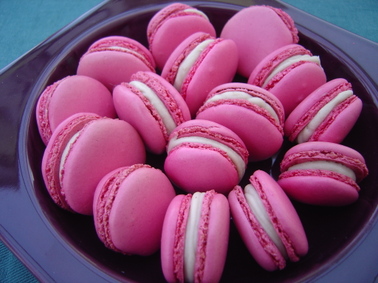
Love Recipies - Macaroons, how I love you!
To make about 22 macaroons, 220grams icing sugar, 120 grams groud almonds, 90 grams of egg whites, 30 grams caster sugar, a pinch of salt, 2-3 drops of lemon juice.
* 2-3 days beforehand, prepare the egg whites and keep them in the fridge in a container covered with cling film. Six hours after use, take them out the fridge.
* Carefully mix the icing sugar and ground almonds together and pass them through a sieve.
*Whisk the egg whites with a pinch of salt and 2-3 drops of lemon juice until it holds its shape in soft peaks. Lower the speed of the electric whisk to minimum and slowly add the caster sugar. Then add any colouring in powder and/or aromas (from the tip of a teaspoon).
* Combine the almonds and sugar mix with the whisked egg whites in three of four stages, mixing well after each addition. To do this, it is best to use a palette knife. At the end of the mixing, the mixture should hold its shape like a "ribbon" when dropped from the palette knife. This way you can judge whether you have completed the task successfully!
* Fill a forcing-bag with the mixture and pipe out on the baking-sheets forming small circles about three or four centimetres apart. Leave to rest at room temperature for at least an hour.
* Place into a fan oven which has already been heated to 150° C, cooking them for 14 minutes. When taking the macaroons out of the oven, transfer them immidiately, still attached to the baking-sheets, on to a cold surface. The rapid change of temperature will make it easier to detach them. Leave them to rest for about an hour.
* Carefully detach them and lightly press the underneath of esch one. At this point, you can give free rein to your creativity, filling them as you wish. For example, they are excellent flavoured with vanilla with a dusting of cocoa added just before putting them into the oven. A filling can be made with 150 grams of plain chocolate and 65 grams of milk to which has been added 25 grams of virgin olive oil cold...and why not, a pinch of Cayenne pepper!

* 2-3 days beforehand, prepare the egg whites and keep them in the fridge in a container covered with cling film. Six hours after use, take them out the fridge.
* Carefully mix the icing sugar and ground almonds together and pass them through a sieve.
*Whisk the egg whites with a pinch of salt and 2-3 drops of lemon juice until it holds its shape in soft peaks. Lower the speed of the electric whisk to minimum and slowly add the caster sugar. Then add any colouring in powder and/or aromas (from the tip of a teaspoon).
* Combine the almonds and sugar mix with the whisked egg whites in three of four stages, mixing well after each addition. To do this, it is best to use a palette knife. At the end of the mixing, the mixture should hold its shape like a "ribbon" when dropped from the palette knife. This way you can judge whether you have completed the task successfully!
* Fill a forcing-bag with the mixture and pipe out on the baking-sheets forming small circles about three or four centimetres apart. Leave to rest at room temperature for at least an hour.
* Place into a fan oven which has already been heated to 150° C, cooking them for 14 minutes. When taking the macaroons out of the oven, transfer them immidiately, still attached to the baking-sheets, on to a cold surface. The rapid change of temperature will make it easier to detach them. Leave them to rest for about an hour.
* Carefully detach them and lightly press the underneath of esch one. At this point, you can give free rein to your creativity, filling them as you wish. For example, they are excellent flavoured with vanilla with a dusting of cocoa added just before putting them into the oven. A filling can be made with 150 grams of plain chocolate and 65 grams of milk to which has been added 25 grams of virgin olive oil cold...and why not, a pinch of Cayenne pepper!
venerdì 10 dicembre 2010
Italian Recipies - How to make Pizza
You need
Dough:
white flour
water
brewer's yeast
2 spoons of sugar
1 spoon of salt salt
Dressing:
tomato sauce
mozzarella
oregano
fresh basil
salt
olive oil
It's truly easy to make Pizza!
You just have to put the dough's ingredients together until you get a smooth mix.
Then you leave this dough alone for an hour so it can raise.
After this hour you just roll it on a flat and finally put it in a pan, put the tomanto sauce, mozzarella, oregano, fresh basil, salt and olive oil on it, put it on the oven for 20 minuts or more.
 Your pizza is ready!
Eat it!
Tasty!
Dough:
white flour
water
brewer's yeast
2 spoons of sugar
1 spoon of salt salt
Dressing:
tomato sauce
mozzarella
oregano
fresh basil
salt
olive oil
It's truly easy to make Pizza!
You just have to put the dough's ingredients together until you get a smooth mix.
Then you leave this dough alone for an hour so it can raise.
After this hour you just roll it on a flat and finally put it in a pan, put the tomanto sauce, mozzarella, oregano, fresh basil, salt and olive oil on it, put it on the oven for 20 minuts or more.

Eat it!
Tasty!
Portofino

PORTOFINO, OUR LOVE!
Do you already know Portofino? Well, if you don't you MUST GO there! It's simply fabulous!
Portofino is a picturesque, half-moon shaped seaside village with pastel houses lining the shore of the harbor. Portofino has shops, restaurants, cafes, and luxury hotels.
A castle sits atop the hill overlooking the village.
Portofino Location: sits on a peninusula in the Tigullio Golf east of Genoa in the northern Italian region of Liguria.

Here is a map of the Italian region "LIGURIA".
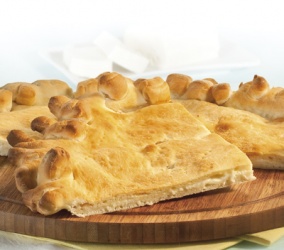
I advise you to eat FOCACCIA, a really tasty local speciality... yum yum!
... and to try the local wine: Pigato and Vermentino: for wine connoisseurs!!!
More info? Ask us!


giovedì 9 dicembre 2010
Best cities - Venice
History and culture
The first human settlements on the Venice Lagoon islands date back to the 5th and 6th centuries, when the inhabitants from the mainland came to this semi-swamp area to escape the barbaric invasions that followed the fall of the Roman Empire. The populations coming from mainland Venice settled in the lagoon, fighting as hard as they could to survive: little by little this group of pieces of land surrounded by water took on the semblance of a real town, a town that was so unique and special that it would become the only one of its kind in the world. The new inhabitants built several rafts of various sizes, supported by strong wooden poles that were fixed to the underside. The rafts were connected to each other with wooden walkways and houses, buildings and monuments were then built on them.When Venice had a big enough population to begin to deserve the title of city, it was then annexed to the Byzantine Empire, while maintaining its own independence. In 697, Venice elected its first Doge, giving life to a new government: the Dogado (Maritime Empire). However, the event that finally made Venice’s name in the world took place in 828, when two enterprising Venetian merchants stole the Apostle Mark’s body from Alessandria in Egypt, and secretly transported it to Venice. A huge church, consecrated in 1094, was built to house the remains of the Saint, who then became the patron saint of the city: the Basilica of San Marco.
Since the very beginning, Venice showed strong inclinations towards trade. This increased to the point that at the end of the 11th century, the city set up close trading connections with Byzantium. This was the start of the Republic of Venice, which was finally consecrated in 1202 through the 4th crusadethat saw the conquering of Byzantium and then the islands in the Aegean and Ionian Seas. The eastern city was sacked and the booty was taken to Venice, where it was used to decorate churches and palaces. The four bronze horses that still adorn the main facade of the Basilica of San Marco were also part of that booty.
After the 4th crusade, Venice gained a strong political role due to the fact that it now controlled a large part of the Mediterranean and it also increased its military power and its trading.
The city’s historical rivalry with Genoa exploded under the form of four wars that were fought one after the other until a truce was finally agreed at the end of 1381, when Venice beat Genoa in the famous Battle of Chioggia(1380). Venice then realized that it was necessary for the city to have bases on the mainland too and began to expand towards Padua, Vicenza, Verona, Brescia and Bergamo. Venice’s prestige grew at the same rate as the increase in the land it controlled and was thus given the name of Serenissima. However, danger was round the corner: the Serenissima was so busy expanding on the mainland that it did not realize that the Turks’ power was expanding rapidly, to the point where they took over Constantinople (Byzantium) and some cities on the Greek and Albanian coastlines.
The League of Cambrai was founded in 1508: this was a sort of coalition against Venice which most of the European powers joined. Venice managed to maintain some of its land after seven years of war, but it lost its control over the Mediterranean.
In the 17th century, the Serenissima had to give up Crete, one of its historical lands and the whole of the Peloponnesus area to the Turkish Empire. In the period that followed, Venice’s political power was seriously damaged but there was a considerable increase of the arts and literature in the city, which gave rise to the creation of works of art by Tiepolo, Pietro Longhi and Canovaand to theatre plays by Carlo Goldoni.
In 1797, Napoleone Bonaparte conquered Venice, and sacked the whole area, just as he did in the rest of the country. A short while later the Emperor handed over the city to Austria, a ruler that was never accepted by the Venetians: in 1848, the Austrians were run out of the city by a group led byDaniele Manin, and the second Republic of Venice was proclaimed. This new republic did not last for long, however, as Venice was annexed to the newKingdom of Italy in 1866.

Iscriviti a:
Post (Atom)